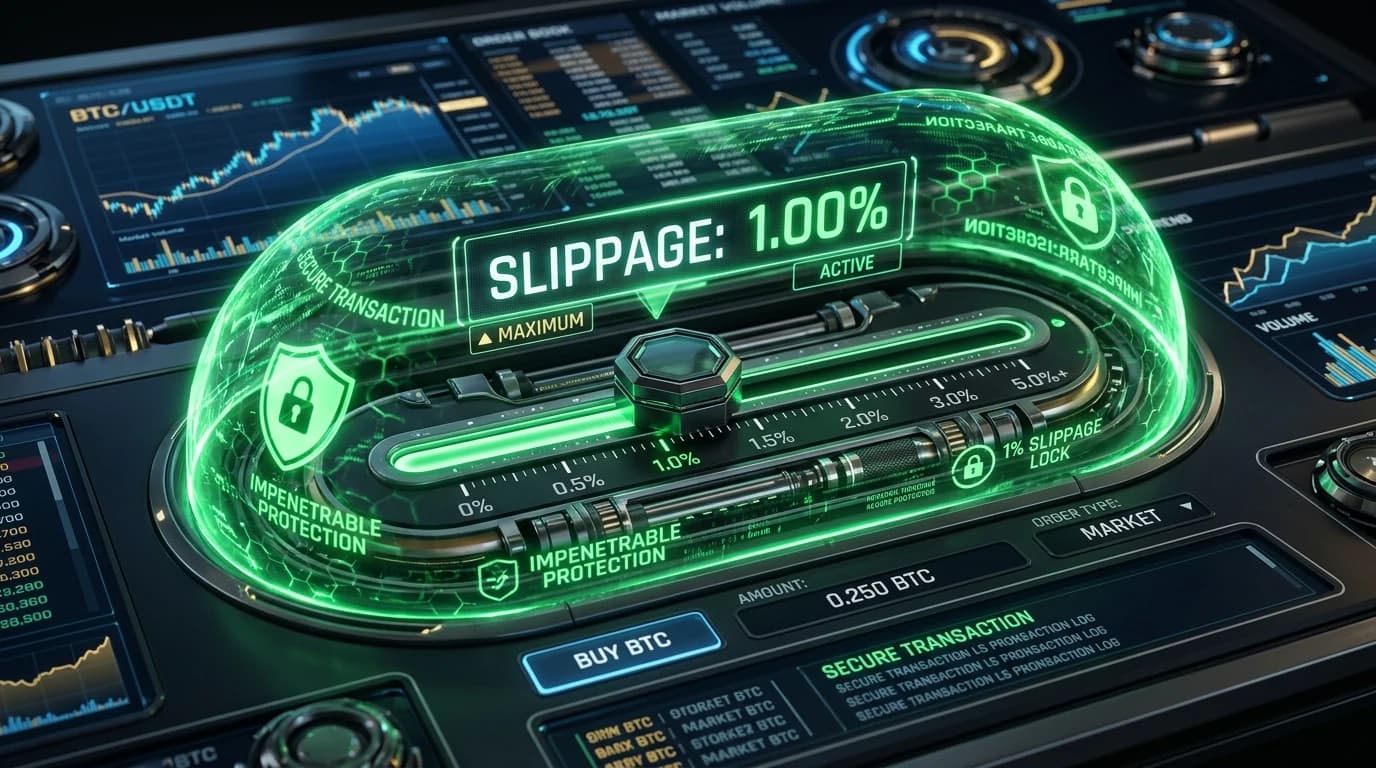
The High-Risk Setting: Slippage Tolerance Explained
When swapping tokens on decentralized exchanges (DEXs) like Jupiter, Raydium, or Uniswap, Slippage Tolerance defines the maximum percentage price difference you are willing to accept between the time you submit a swap and the time the transaction is confirmed on-chain.
Why Setting 10% Slippage Is an Invitation to MEV Bots
When you submit a swap with 10% slippage on a public RPC endpoint:
- The Guaranteed Loss Window: You are telling the blockchain: "I will accept 10% fewer tokens than the current market price."
- Automated Sandwich Calculation: MEV bots instantly calculate the exact amount of SOL required to front-run your trade, push the price up by exactly 9.99%, and back-run your transaction to siphon that 10% delta directly into their wallet.
- Failed Transactions vs Siphoned Value: Setting tight 0.5% slippage may cause transactions to fail during high volatility, but completely protects your capital from bot manipulation.
Golden Rules for Solana DEX Trading
- Set slippage to 0.5% to 1.0% for liquid tokens (SOL, USDC, large caps).
- Use Dynamic Slippage settings on aggregators like Jupiter that adjust boundaries based on real-time pool depth.
- Always enable Jito MEV Protection / Private RPCs to route transactions directly to validators.
Explore our architectural breakdown on Solana MEV and Jito private transaction bundles.
Audit your browser connection security and check your outward IP on our free Web3 network inspector.