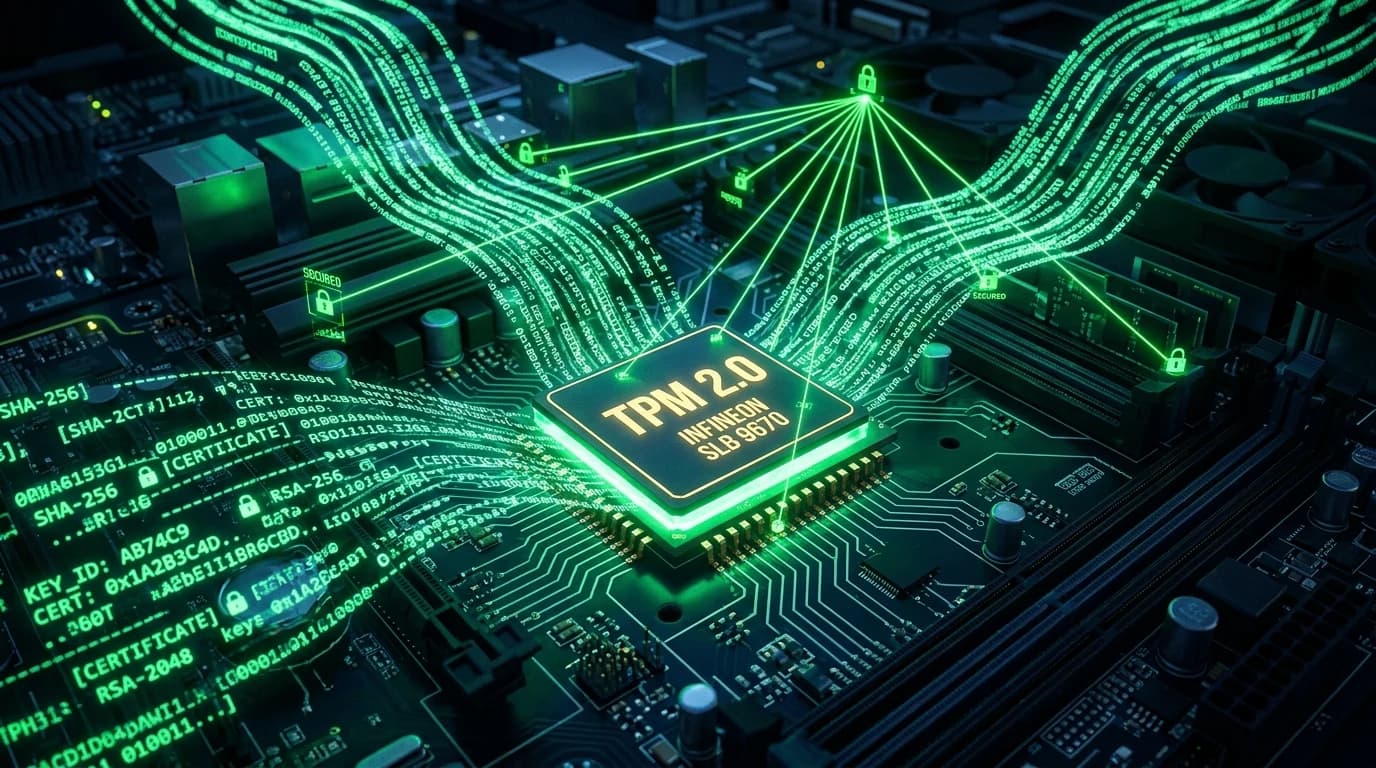
The Hardware Anchor: Trusted Platform Modules (TPM 2.0)
Software-based hardware bans (checking hard drive serials or MAC addresses) failed because ring-0 spoofers could easily intercept and spoof Windows API calls. To create an unforgeable hardware identity, Riot Vanguard, FaceIT, and Easy Anti-Cheat transitioned to TPM 2.0 Cryptographic Attestation.
The Architecture of the Endorsement Key (EK)
Every genuine TPM 2.0 chip manufactured by Intel, AMD, Infineon, Nuvoton, or STMicroelectronics contains a permanent cryptographic identity:
- Burned-In Silicon Key: The Endorsement Key (EK) is an RSA-2048 or ECC-256 private key permanently fused into the TPM hardware silicon during factory fabrication. The private key cannot be extracted or modified, even with physical chip decapping.
- Manufacturer Signed Certificate: The factory burns an EK Certificate (EK Cert) into the TPM NVRAM, digitally signed by the chip manufacturer root Certificate Authority (CA).
- Cryptographic Challenge-Response: When you launch Valorant, the anti-cheat kernel driver generates a random cryptographic challenge nonce. The TPM signs this challenge using its private EK. Vanguard validates the signature against the public manufacturer root certificate.
Why Emulated / Spoofed TPMs Fail Instantly
Software spoofers claiming to "spoof TPM serials" fail because they cannot forge the cryptographic signature of Intel or AMD root CAs. Attempting to present a self-signed EK cert triggers immediate hardware ban attestation failures.
Review our analysis on Vanguard TPM 2.0 and Secure Boot troubleshooting.
Audit your system network security and check your public IP address on the DCIPCHECK Pro portal.