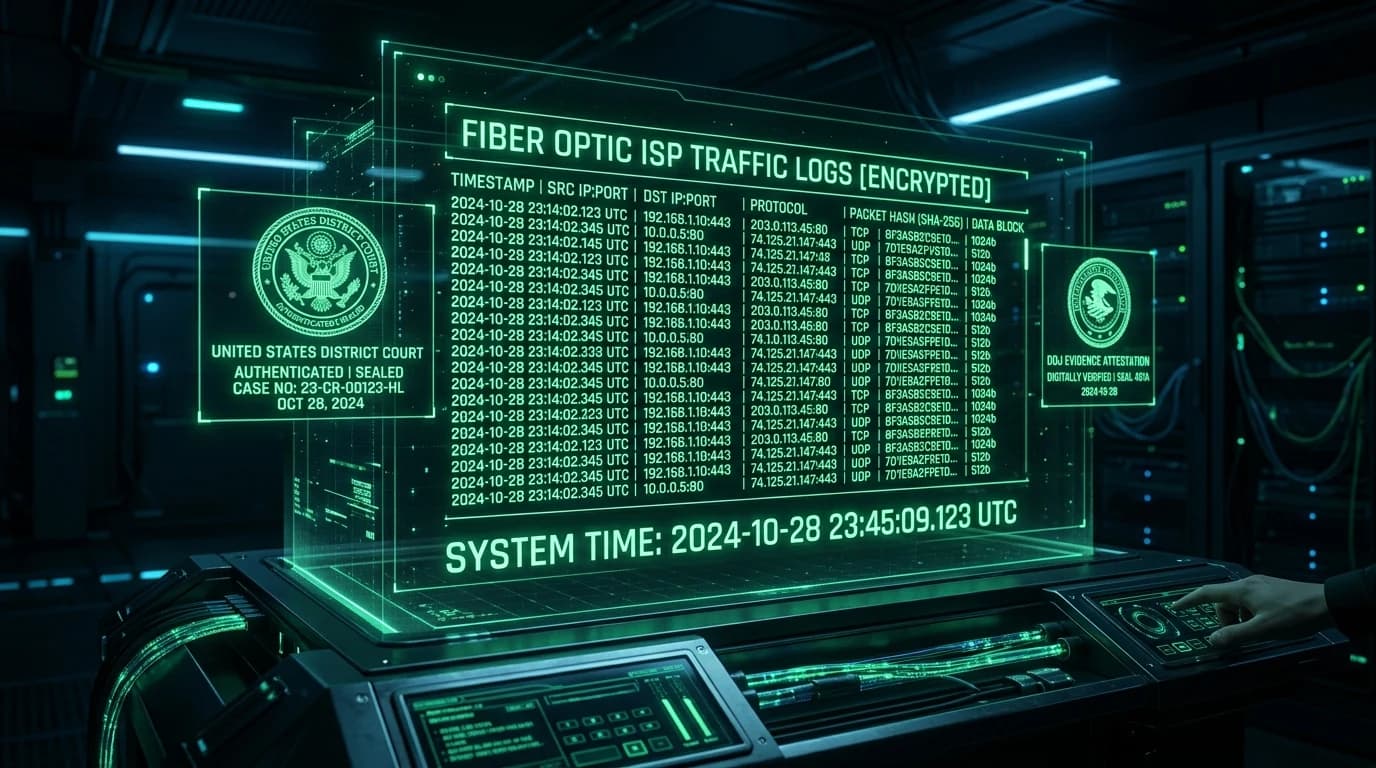
The Boundary Between Technical Data & Legal Identity
A public IP address (such as 198.51.100.24) is purely a numerical network identifier. It does not carry a person name, physical street address, or Social Security number. To bridge the gap between an IP address and a human being, copyright holders, plaintiffs, and law enforcement agencies must utilize the ISP Subpoena Process.
The 4 Stages of an IP Address Subpoena
- Evidence Logging (IP + UTC Timestamp + Port): Plaintiffs in copyright or cybercrime cases capture log files showing that a specific IP was active on a torrent swarm or server at an exact millisecond timestamp.
- Filing a "John Doe" Lawsuit: Because the defendant identity is unknown, plaintiffs file a civil action against "John Doe, subscriber assigned IP 198.51.100.24".
- Issuing an Expedited Discovery Subpoena: A federal or civil judge signs an order commanding the Internet Service Provider (Comcast, AT&T, Verizon, etc.) to produce subscriber identity records.
- DHCP Lease Log Correlation: The ISP queries its internal RADIUS and DHCP lease archives to identify which customer account was leased that dynamic IP at that precise UTC moment.
Why an IP Address is Not Always Proof of Guilt
Federal court rulings in the United States (such as Cobbler Nevada, LLC v. Gonzales, 9th Circuit) have established that an IP address alone is insufficient to prove who committed an act. Because multiple family members, guests, and open Wi-Fi connections share a single public IP, the subscriber cannot be assumed guilty without corroborating forensic evidence on physical devices.
For more on what geolocation databases can and cannot reveal, read our guide on myths vs reality in home address IP geolocation.
Audit your ISP details, ASN routing, and public IP address on our free network diagnostics suite.