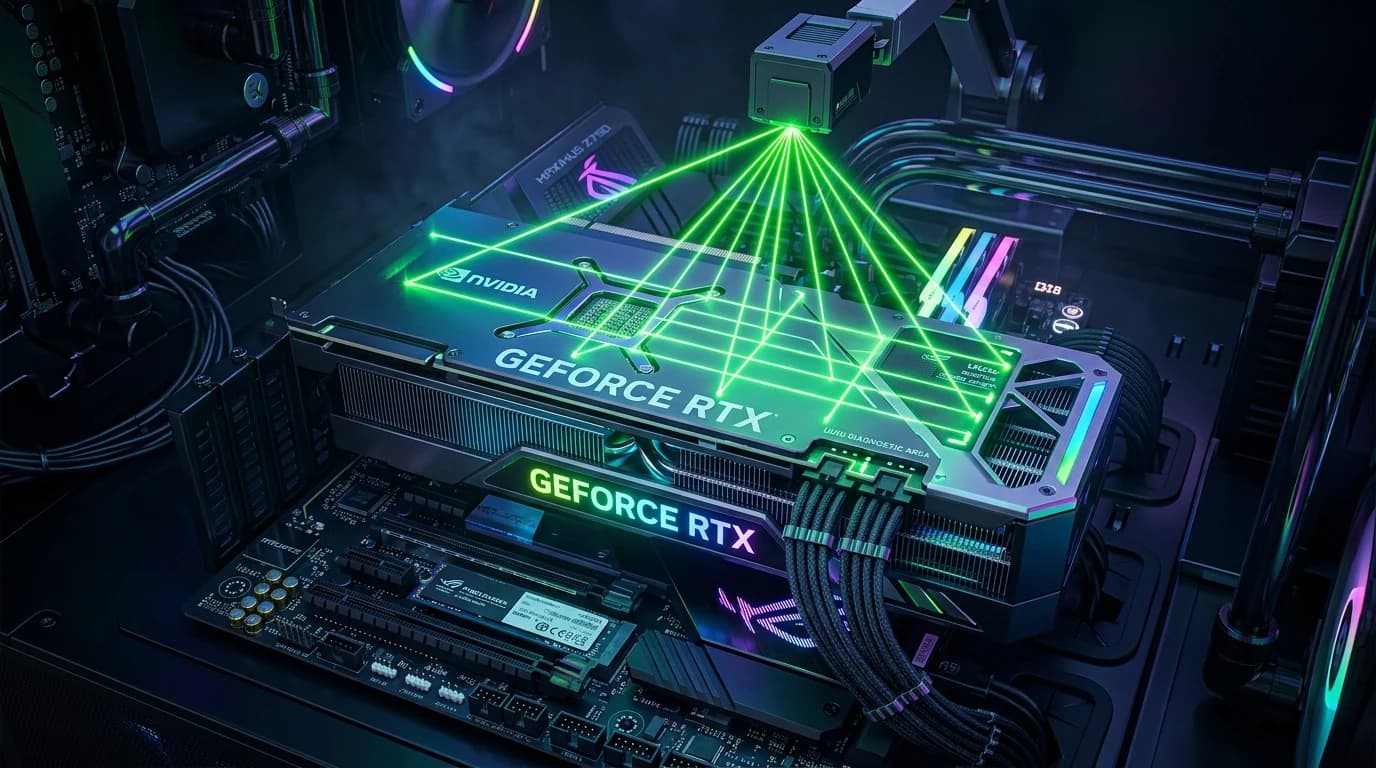
The Graphics Card Identifier in Anti-Cheat Blacklists
When players receive a permanent hardware ban in games like Valorant, Apex Legends, or Rainbow Six Siege, many assume replacing their motherboard or SSD is sufficient. However, modern anti-cheats heavily fingerprint the Graphics Processing Unit (GPU).
How Anti-Cheats Query Unique GPU Identifiers
| Query Method | Source Layer | Hardware Data Captured |
|---|---|---|
| Nvidia NVML API | nvml.dll / Kernel driver | Globally Unique GPU UUID (e.g., GPU-e1a2b3...) |
| DirectX / DXGI Enumeration | dxgi.dll / D3D12 | PCI Device ID, Vendor ID, Subsystem ID, Revision |
| PCIe Device Tree Walk | Kernel bus driver (pci.sys) | Bus/Device/Function (BDF) physical slot routing address |
Why Software GPU Spoofers Fail
Nvidia GPU UUIDs are stored in the physical Video BIOS (VBIOS) ROM chip and encrypted within driver handshake packets. Kernel anti-cheats query the GPU via multiple independent API vectors simultaneously. If the NVML UUID conflicts with direct PCIe registers, the system triggers an immediate HWID ban flag.
Read our technical analysis on NVMe storage drive serial query limits.
Audit your connection profile on our free online IP scanner.