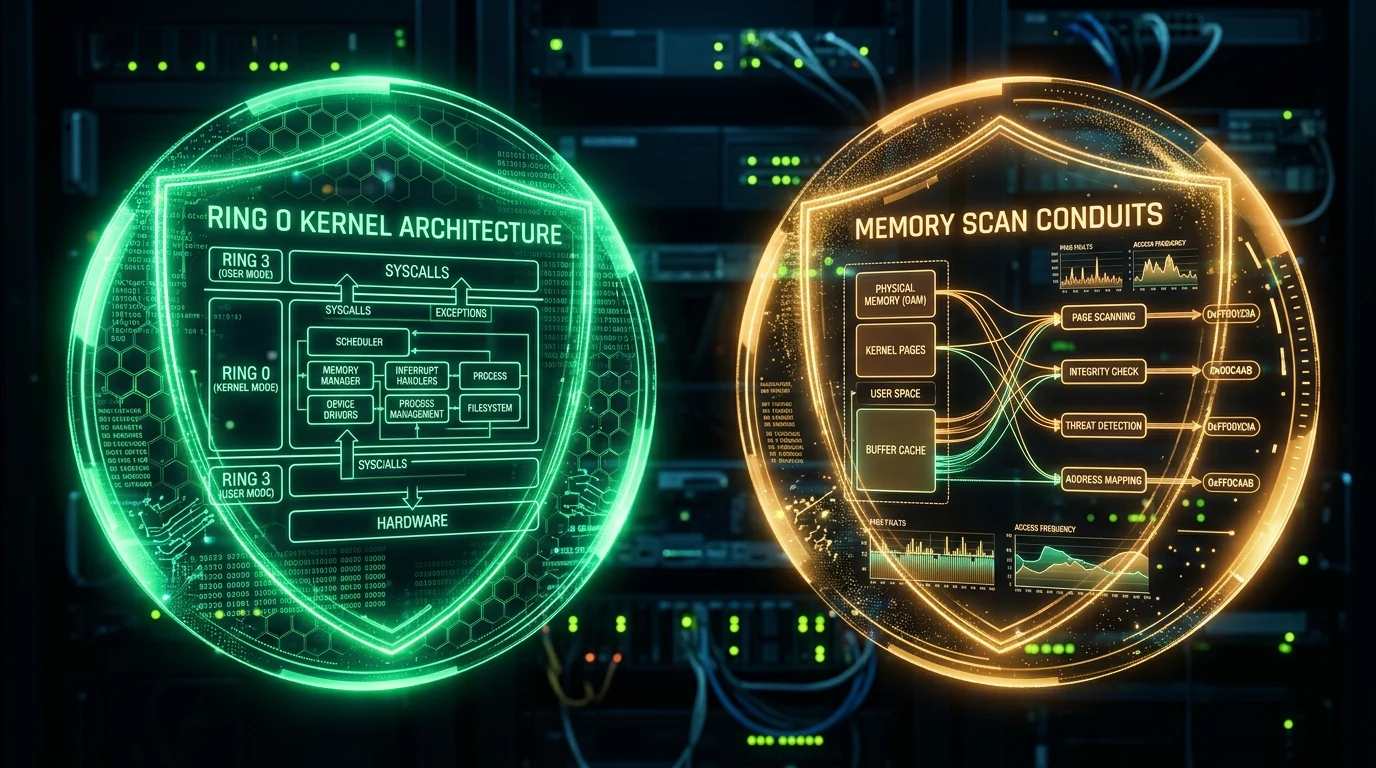
The Battle of Ring 0 Anti-Cheat Drivers
In competitive PC gaming, two anti-cheat platforms represent the gold standard for high-integrity enforcement: Riot Vanguard (powering Valorant and League of Legends) and FACEIT Anti-Cheat (powering third-party competitive matchmaking in Counter-Strike 2).
Architectural Comparison: Driver Initialization & Access Levels
| Feature | Riot Vanguard | FACEIT Anti-Cheat |
|---|---|---|
| Driver Boot Stage | System Startup (Boot-Start Driver SERVICE_BOOT_START) | On-Demand (Client Launch SERVICE_DEMAND_START) |
| Hardware Requirements | Mandatory TPM 2.0 & UEFI Secure Boot (Windows 11) | UEFI Secure Boot recommended; TPM enforced for flagged accounts |
| DMA Protection | Strict IOMMU virtualization verification | Hardware DMA card signature detection |
| Network Telemetry | Integrates with Riot regional cloud cluster | Integrates with FACEIT match server infrastructure |
Which Approach is More Secure?
Vanguard boot-start philosophy ensures that no unauthorized kernel drivers can load before it, eliminating entire categories of hypervisor cheats. FACEIT on-demand philosophy respects user privacy by terminating kernel inspection whenever the client is closed. Read our deep dive on Vanguard kernel HWID ban mechanisms.
Ensure your gaming network is optimized and audit your public IP on our free network telemetry diagnostic portal.