The Paradigm Shift of Smart Contract Wallets
For over a decade, Ethereum users were constrained by Externally Owned Accounts (EOAs) requiring 12-word seed phrases and ETH to pay gas fees. ERC-4337 Account Abstraction transformed wallets into programmable smart contracts, enabling social recovery, biometric passkeys, and gasless transactions.
How ERC-4337 Operates Without Consensus Changes
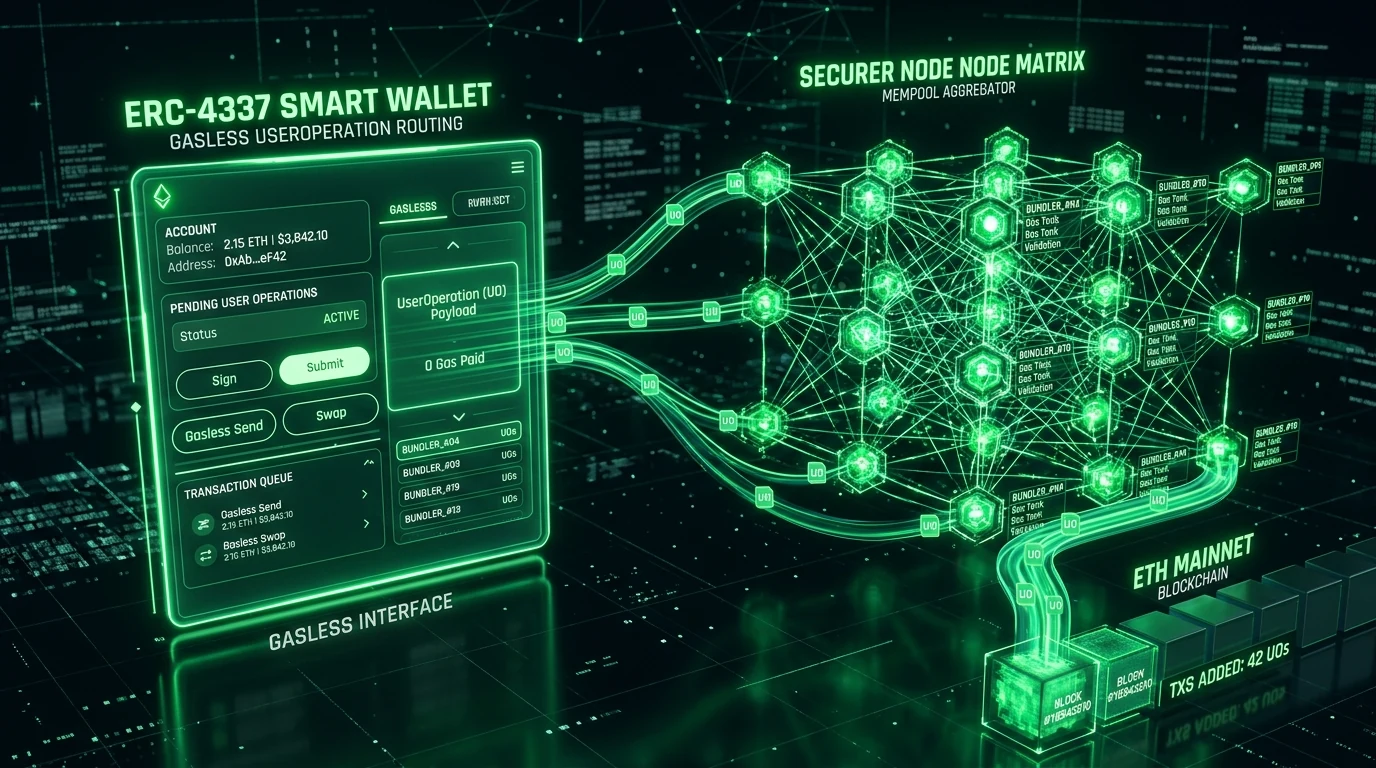
Rather than submitting standard transactions, ERC-4337 users create high-level intent objects called UserOperations (UserOps):
- Alternate Mempools: UserOps are sent to dedicated off-chain UserOp mempools rather than the main Ethereum transaction queue.
- Bundler Nodes: Specialized actors known as Bundlers (running services like Biconomy, Stackup, or Pimlico) collect multiple UserOps, validate signatures, package them into a single
handleOps()call, and submit them on-chain. - Paymasters (Gas Sponsorship): Smart contract Paymasters sponsor gas fees on behalf of users, allowing transactions to be paid in stablecoins (USDC) or subsidized entirely by dApps.
Network Privacy & Bundler IP Telemetry
Because UserOps are submitted via RPC endpoints to third-party Bundler nodes, centralized bundler operators can log user IP addresses and correlate them with smart contract wallet addresses. Users requiring maximum privacy should configure private RPC endpoints or route UserOps through Tor.
Explore our related guide on Web3 wallet RPC privacy and IP logging defenses.
Audit your browser connection security and check your outward IP on our free Web3 network inspector.