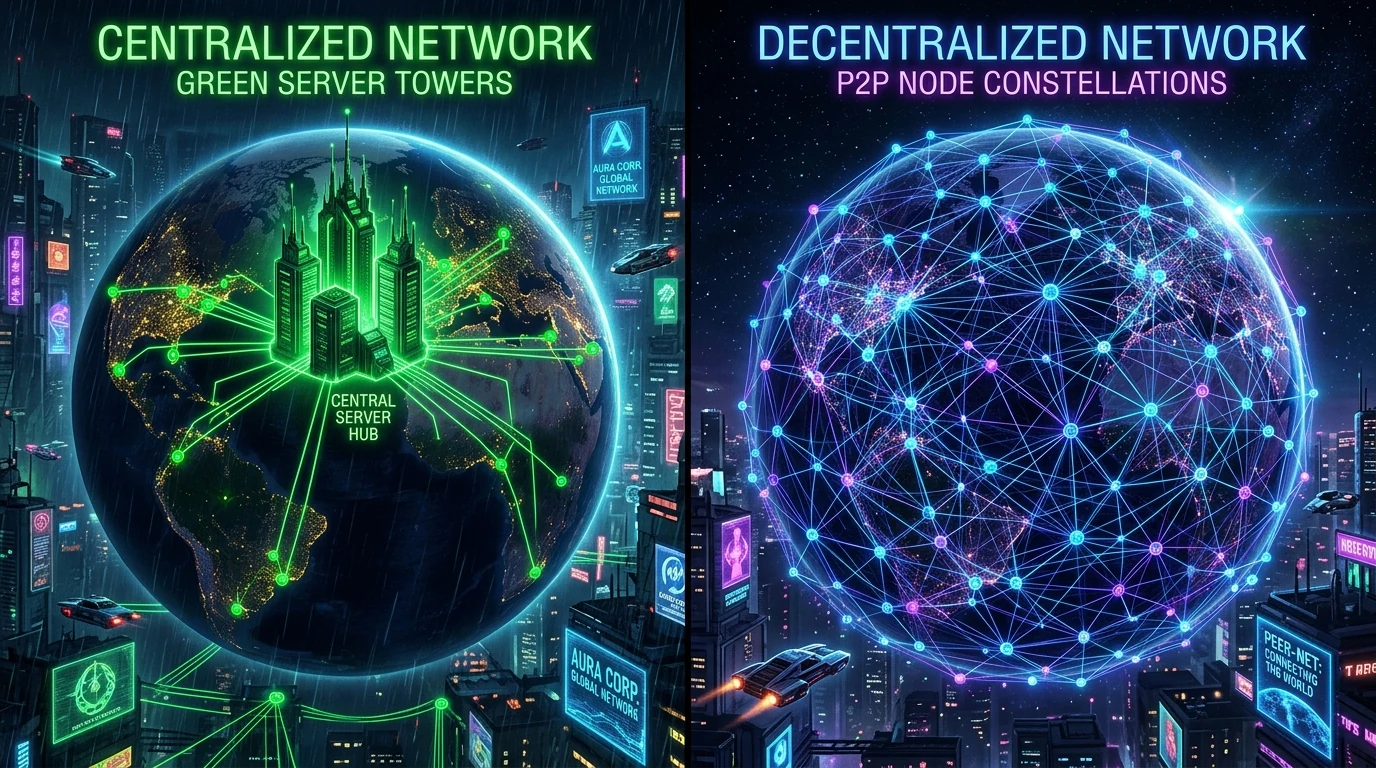
The Emergence of Decentralized VPN Architectures
Traditional Virtual Private Networks (like Mullvad, IVPN, or NordVPN) operate centralized server fleets in commercial datacenters. While reputable providers implement audited zero-logs policies, users must ultimately trust a single corporation not to log traffic. This trust requirement led to the creation of Decentralized VPNs (dVPNs) like Sentinel (Cosmos), Mysterium Network, and Orchid.
Architectural Comparison: Centralized vs Decentralized VPNs
| Feature | Traditional VPN (e.g. Mullvad) | Decentralized VPN (e.g. Mysterium) |
|---|---|---|
| Node Infrastructure | Dedicated datacenter servers owned/leased by company | Crowdsourced residential & VPS nodes run by global users |
| Payment Model | Fixed monthly/yearly subscription | Pay-as-you-go crypto micropayments per GB (MYST, OXT) |
| Exit Node Trust | High trust in provider zero-log policy | Zero trust in individual node operators (traffic must be TLS-encrypted) |
| Streaming Geoblocking | Datacenter IPs often blocked by Netflix/BBC | Residential IPs bypass streaming bans effortlessly |
The Security Caveat: Unencrypted Traffic on dVPN Nodes
Because anyone can run a dVPN exit node to earn crypto rewards, an unscrupulous node host could inspect unencrypted DNS or plain HTTP traffic passing through their machine. Always ensure end-to-end TLS encryption (HTTPS/DoH) is active. Read our comparison on residential vs datacenter network classifications.
Inspect what ISP and ASN classification your active VPN tunnel presents on the DCIPCHECK IP diagnostics tool.