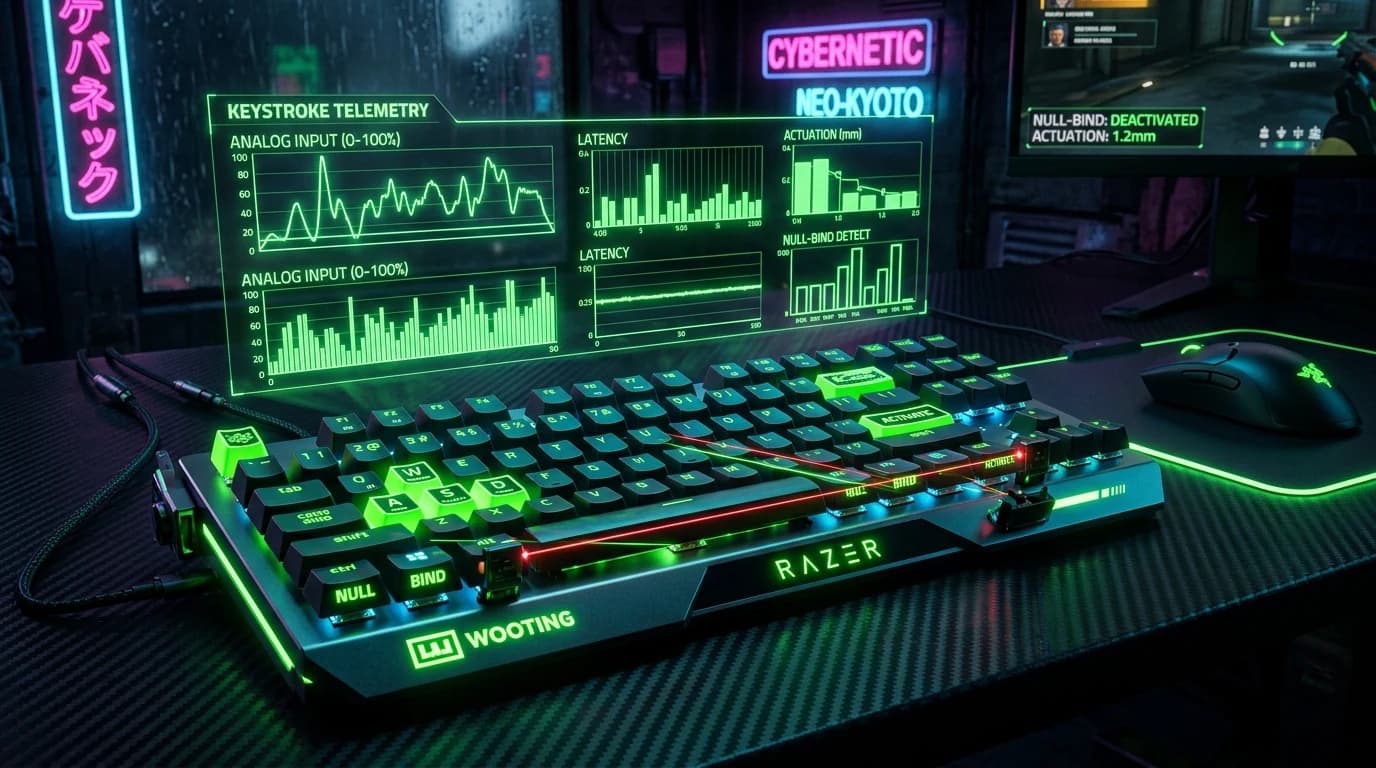
The Counter-Strafing Revolution: SOCD & Snap Tap
In Counter-Strike 2, achieving 100% first-bullet firing accuracy requires counter-strafing: releasing the A key and instantaneously tapping D to halt player momentum. Historically, overlapping keypresses resulted in deceleration lag. In 2024, keyboard manufacturers introduced Simultaneous Opposite Cardinal Direction (SOCD) firmware features—such as Razer Snap Tap and Wooting Snappy Tappy.
Why Valve Banned Hardware SOCD & Null-Binds
By automatically prioritizing the most recent directional input without requiring the physical release of the opposing key, players achieved mathematically perfect 0.0ms counter-strafe stops. Valve deemed this an automated hardware advantage and updated CS2 sub-tick netcode to detect it:
- Zero-Tick Overlap Telemetry: In natural human physiology, overlapping keystroke releases take 10ms to 40ms. Achieving continuous 0ms key transitions across 50 consecutive strafes triggers automated heuristic flags.
- Mid-Match Server Kicks: When CS2 game servers detect SOCD patterns or hardware null-binds, the player is instantly kicked with the error: "Input automation detected. You have been disconnected from the server."
- Preventing Competitive LAN Exploitation: Pro circuit tournaments (ESL, BLAST, PGL) now mandate default SOCD profiles on all tournament peripherals.
Configuring Your Analog Keyboard for CS2 Compliance
To prevent server kicks, disable Snap Tap / SOCD in Razer Synapse or Wootility settings and rely on standard Rapid Trigger functionality. Learn more in our analysis on CS2 sub-tick netcode and hit registration.
Audit your network connection latency on our free online IP scanner.