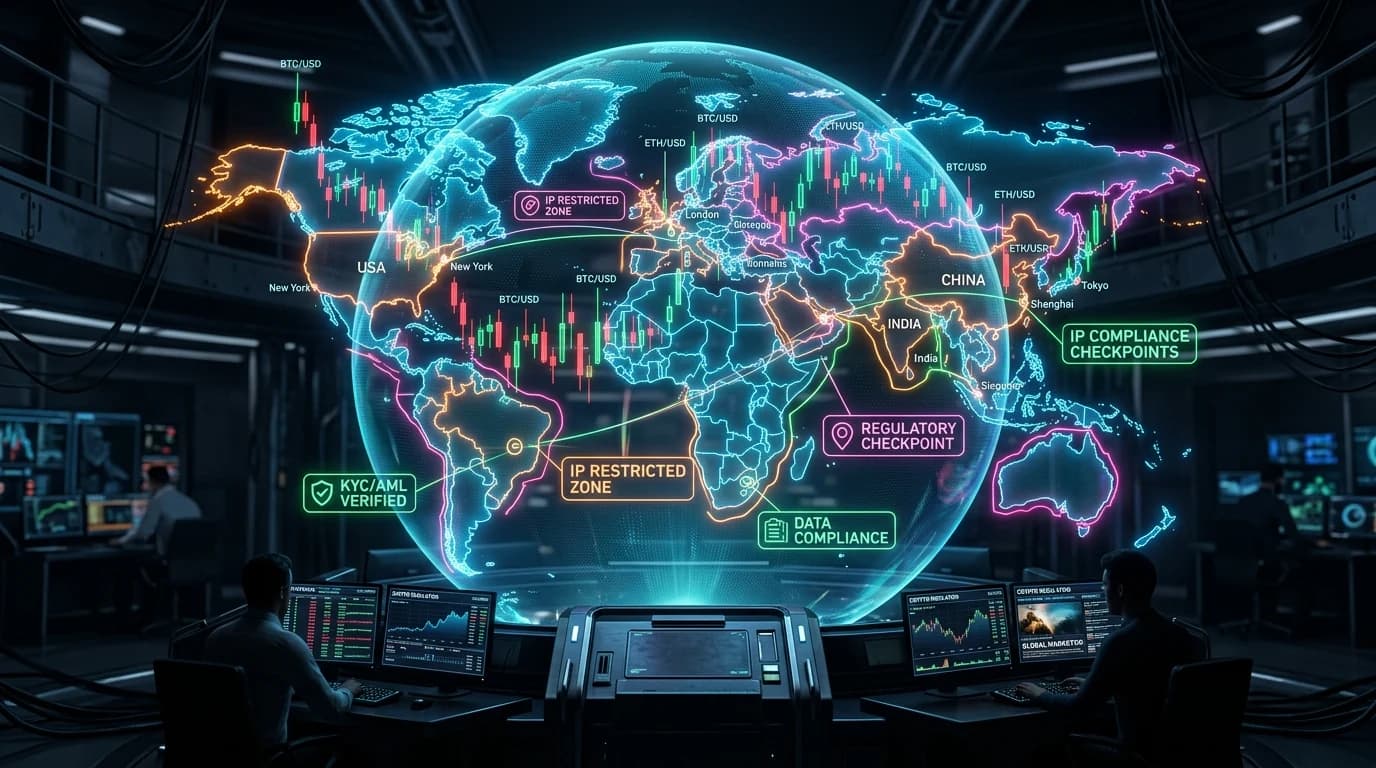
Why Centralized Crypto Exchanges Enforce Strict Geofencing
Centralized cryptocurrency exchanges (CEXs) such as Binance, Coinbase, Kraken, and OKX operate under rigorous regulatory frameworks, including FinCEN regulations in the US, MiCA in the European Union, and global FATF sanctions compliance.
To prevent access from restricted jurisdictions, these exchanges employ enterprise-grade IP Geolocation & Threat Intelligence Systems that inspect every login attempt in milliseconds.
How Exchanges Detect VPNs & Proxy Tunnels
Many traders attempt to use commercial VPNs while traveling abroad to access their trading accounts, only to find their withdrawals frozen. How do exchanges detect active VPNs?
- Autonomous System Number (ASN) Inspection: Exchanges cross-reference your connecting IP against global BGP routing tables. If your IP belongs to a hosting provider (like DigitalOcean, AWS, or M247) rather than a residential ISP (like Comcast or Vodafone), the system flags the connection as an automated proxy.
- IP Abuse Velocity: If 5,000 different users connect from the exact same VPN exit node IP address within an hour, fraud engines classify that IP as high-risk.
- WebRTC & DNS Leak Mismatches: If your HTTP IP is in Switzerland but your browser WebRTC broadcasts a US residential subnet, the exchange detects the tunnel mismatch. Review our guide on WebRTC leaks and VPN vulnerabilities.
Best Practices for Managing Crypto Exchange Access While Traveling
- Notify Support of International Travel: Proactively submit travel notifications through exchange security portals before logging in from foreign IP subnets.
- Avoid Free or Low-Quality VPN Services: Learn why shared exit nodes trigger security alerts in our report on free VPN exit node risks.
- Audit Your IP Reputation Before Trading: Check your IP classification on our Pro Cyber Shield IP audit suite.